
Do You Know The Difference Between Bifacial Solar Panel v/s Bifacial TOPCon Solar Panel?
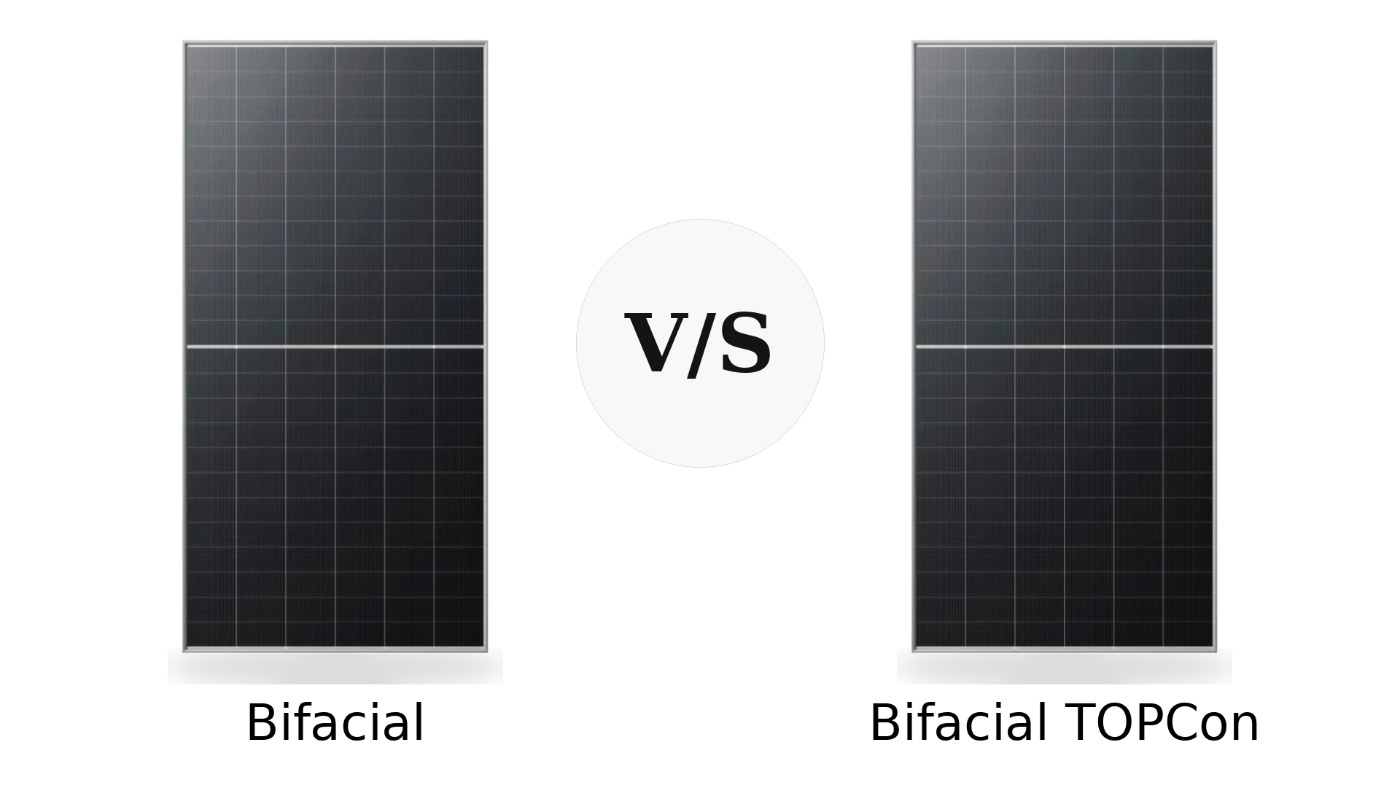
Bifacial Solar Panel vs Bifacial TOPCon Solar Panel: Key Differences, Technology, Efficiency and Performance
Subtitle: A Complete Guide to Understanding Solar Panel Construction, Power Generation, Efficiency and the Right Choice for Your Solar Installation.
Introduction
Solar technology is continuously evolving, offering better efficiency, improved performance and more reliable energy generation. Among the available solar technologies, Monofacial Solar Panels and Bifacial TOPCon Solar Panels are two important types used in residential, commercial and industrial solar installations.
However, these two panels are not simply different versions of the same technology. They differ in cell technology, module construction and power generation capabilities.
Let's understand their key differences.
1. What Is a Monofacial Solar Panel?
A Monofacial Solar Panel is designed to generate electricity primarily from sunlight falling on its front surface. Its rear side generally contains an opaque backsheet, which prevents meaningful electricity generation from the backside.
For example, Adani Solar's Eternal Shine series includes P-Type Mono PERC Monofacial modules. Its published Gen-II specifications describe half-cut cell technology and a 144-cell configuration.
Key Features:
- Generates electricity primarily from the front side.
- Generally uses an opaque rear backsheet.
- Does not offer significant rear-side power generation.
- Suitable for installations where rear-side sunlight is limited.
- Can be a practical option for conventional rooftop installations.
2. What Is a Bifacial TOPCon Solar Panel?
A Bifacial TOPCon Solar Panel combines N-Type TOPCon cell technology with a bifacial module design.
Unlike conventional monofacial modules, it can generate electricity from both its front and rear surfaces.
The front side captures direct sunlight, while the rear side utilizes reflected and diffused sunlight from surrounding surfaces such as rooftops, concrete floors or reflective ground.
Adani Solar's Elan Shine TOPCon series is an example of this technology.
According to one published G2G datasheet, the series includes:
- Power range: 590–620 Wp.
- Cell configuration: 132 cells.
- Maximum module efficiency: Up to 22.95%.
- Bifaciality factor: 80 ± 5%.
Actual specifications depend on the particular module model.
3. Major Differences Between Both Solar Panels
Monofacial Solar Panel:
- Primarily generates electricity from the front side.
- Generally features an opaque rear backsheet.
- Does not utilize rear-side reflected light for meaningful generation.
- Suitable for conventional rooftop installations.
Bifacial TOPCon Solar Panel:
- Generates electricity from both front and rear surfaces.
- Uses advanced N-Type TOPCon cell technology.
- Can feature transparent backsheet or dual-glass construction.
- Offers additional energy generation potential.
- Suitable for properly designed rooftop and ground-mounted installations.
4. Which Panel Generates More Electricity?
A Bifacial TOPCon Solar Panel can generate additional electricity because it utilizes reflected sunlight from its rear surface.
However, the actual additional energy generation depends on several factors, including installation height, ground reflectivity, tilt angle, panel spacing and rear-side shading.
Therefore, bifacial technology does not guarantee the same additional generation percentage at every installation site.
5. Which Solar Panel Should You Choose?
If your installation has limited rear-side sunlight exposure, a Monofacial Solar Panel may be a practical and economical choice.
However, if your project offers sufficient rear-side light exposure, suitable mounting arrangements and reflective surroundings, a Bifacial TOPCon Solar Panel may deliver better overall energy generation.
Conclusion
Both Monofacial and Bifacial TOPCon Solar Panels have their own advantages and applications.
The right selection depends on your project requirements, installation conditions, budget and expected energy generation.
Before purchasing any solar module, always compare its official datasheet, efficiency, power rating, warranty and long-term performance.
Make an informed decision and choose the solar technology that delivers the best value for your investment.
---
SEO Meta Description
Learn the key differences between Monofacial Solar Panels and Bifacial TOPCon Solar Panels, including cell technology, efficiency, construction, power generation and installation benefits.
Social Media Caption
☀️ Monofacial Solar Panel vs Bifacial TOPCon Solar Panel – What's the Real Difference?
Solar technology is advancing rapidly, and choosing the right solar module can make a significant difference to your solar project's performance.
But what makes a Monofacial Solar Panel different from a Bifacial TOPCon Solar Panel?
Discover the differences in: ⚡ Solar Cell Technology ⚡ Front and Rear Power Generation ⚡ Module Construction ⚡ Efficiency and Performance ⚡ Installation Requirements
Read our complete guide to understand both technologies and make an informed solar investment.
Choose Smarter. Generate More. Go Solar!
#SolarEnergy #AdaniSolar #TOPConSolarPanel #BifacialSolarPanel #MonofacialSolarPanel #SolarTechnology #SolarPower #SolarInstallation #RenewableEnergy #SolarIndia #SolarPV #CleanEnergy #sunpowers #sunpowers.in
Get a free solar site visit
Our team checks your roof, sizes the system, explains the subsidy and gives a written quote. No pressure.
Keep reading
How Does an On-Grid Inverter Work?
Let's Understand On-Grid Inverters and Grid-Tied Inverters
Read more → Is Your State Solar-Ready?Free Quote, Any State
 Sunpowers+91 96210 50636 · sunpowers.in
Solar in Your State: How Sunpowers Serves Customers Across India
Lucknow office, India-wide work — and how to start from wherever you are.
Read more → Adani or Waaree? The Honest AnswerFive Brands ComparedSunpowers+91 96210 50636 · sunpowers.in
Solar Panel Brands Sunpowers Installs: Adani, Waaree, TATA, Luminous Compared
Which panel brand suits which roof, in simple words.
Read more →